Does Pilates Help Weight Loss? Pilates & Yoga, Honestly
Not a fat burner. A muscle-preservation, posture, and stress-reduction tool that quietly compounds when stacked with calorie control. Here's the honest calorie math, and what Pilates and yoga are actually good for.
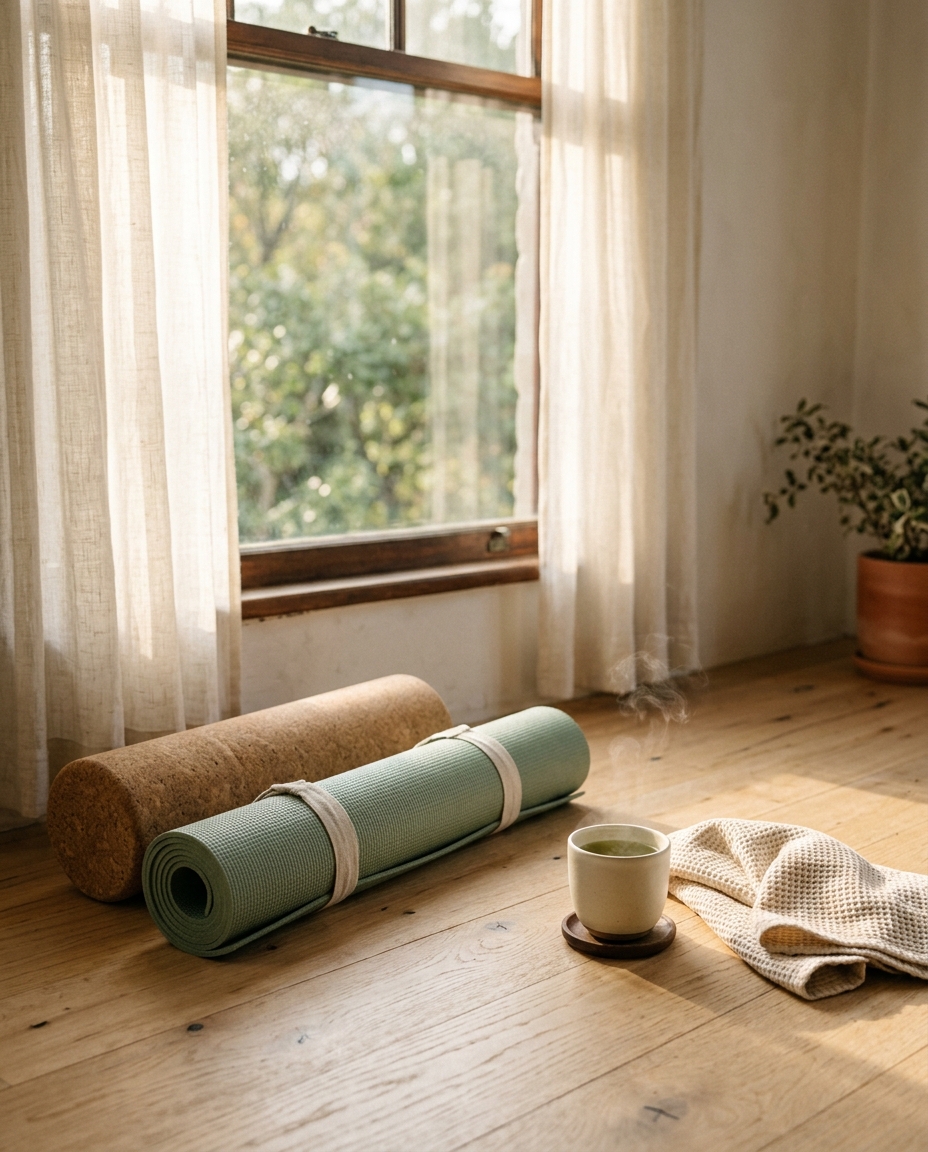
Pilates and yoga are not high-calorie-burn workouts. A 50-minute beginner mat Pilates class burns ~175 calories for a 150-pound adult; reformer Pilates 250-450; vinyasa yoga 200-300; restorative yoga much less. They drive weight change indirectly — through muscle preservation during a calorie deficit, postural change, stress and cortisol reduction, and adherence. As the only intervention, results are slow. Stacked with diet, walking, and strength training, they're the layer that holds the rest together.
The honest verdict
If you ask a search engine "does Pilates help you lose weight," you will get two camps lying back at you in the results: the reformer studio Instagram side promising "long lean transformation in 6 weeks," and the gym-bro side dismissing it as not real exercise. Both are wrong.
Pilates is real exercise. The Mayo Clinic activity compendium pegs it between brisk walking and light cycling for calorie burn. It builds genuine strength in core stabilizers, glutes, and the small muscles around the spine that most adults under-train. The reason it doesn't make you lose 20 pounds in a month is that nothing makes you lose 20 pounds in a month — that's not a Pilates problem, it's a physics problem.
What Pilates and yoga do that walking and lifting alone don't: they keep you mobile. They keep your spine and hips healthy. They lower stress markers. They build the kind of consistency that comes from movement you actually look forward to. The 60-year-old who has done Pilates twice a week for 15 years is in better shape than the 60-year-old who used to bench press and stopped at 40.
For weight loss specifically: Pilates and yoga are the supporting cast. Diet is the lead. Walking and lifting are the second-billed actors. Pilates and yoga are why the whole production runs for years instead of crashing at week six.
How they actually work — the indirect levers
Muscle preservation during a calorie deficit
The most important and most overlooked benefit. When you lose weight, you lose some fat and some muscle. Without resistance work, the ratio can be as bad as 60:40 fat:muscle. Pilates — particularly reformer Pilates with progressive spring resistance — provides enough mechanical tension to preserve a meaningful share of muscle, especially in the core, glutes, and posterior chain. Yoga (especially the strength-based vinyasa and ashtanga variants) does similar work for arms, shoulders, and core.
Posture and visible composition change
A taller posture changes how you look without changing what the scale says. The Y-axis of the body — chin up, ribs down, pelvis neutral — is what most "I look so different" before-and-after photos are actually capturing. Pilates is the most efficient teacher of that postural pattern.
Cortisol and stress reduction
Chronic stress elevates cortisol, which is associated with abdominal fat retention and undermined weight loss. A 2020 Frontiers in Human Neuroscience meta-analysis found regular yoga practice reduces salivary cortisol meaningfully. Pilates (particularly slower, breath-led classes) has similar — though less studied — effects.
Pelvic floor, breath mechanics, and metabolic carryover
Pilates teaches diaphragmatic breathing and pelvic floor coordination. Yoga teaches breath-pacing under exertion. Both translate into better movement economy in everything else you do — walks feel easier, lifts feel cleaner, sleep improves. The metabolic carryover is small but real.
What the trials and meta-analyses showed
- Wells et al. (PLoS ONE, 2014) — Pilates meta-analysis: significant improvements in body composition, flexibility, and dynamic balance over 8-week programs. Modest weight effect.
- Wang et al. (Complementary Therapies in Medicine, 2020) — Pilates for overweight/obese women: significant body fat percentage reduction over 12 weeks combined with diet.
- Cramer et al. (American Journal of Lifestyle Medicine, 2016) — Yoga and weight loss: ~5% body weight loss over 6-12 months in adherent populations, with quality-of-life improvements.
- Pascoe & Bauer (Frontiers in Human Neuroscience, 2020) — Yoga reduces salivary cortisol, supporting the stress-reduction mechanism.
Who actually does this (public-record)
Ryan Seacrest's Pilates plus walking stack
Ryan Seacrest is one of the cleanest documented Pilates cases in the celebrity space. He has talked publicly about training Pilates several times a week, walking daily, taking a tablespoon of olive oil each morning, and following a Mediterranean-leaning diet. He dropped about 30 pounds at 50 with this combination — the prototypical "stack of moderate things, run for years" approach.
The Pilates-celebrity precedent (broadly)
Pilates has been a celebrity fixture since the 1990s — from Joseph Pilates' New York studio, where dancers George Balanchine sent there laid the groundwork, through to today's reformer studios in LA and New York. Hollywood's relationship with Pilates is older than the gym-bro's relationship with deadlifts. The visible-body-control practice many actors maintain is reformer Pilates plus a calorie deficit during shoot prep.
Yoga and the post-COVID adherence wave
Public-record yoga practitioners across entertainment include Russell Brand (who has had multiple unrelated public controversies that we don't endorse), Jennifer Aniston (in print interviews about her routine), and many country and pop figures whose tour-bus routines lean on yoga as recovery work. We frame yoga as a category, not as a celebrity endorsement game.
What to expect, week by week
- Week 1 to 2: Soreness in places you didn't know existed — small spinal stabilizers, deep glutes, hip flexors. Sleep often improves quickly. Mood lifts in the first 7-10 days for most people.
- Week 2 to 4: Posture change becomes noticeable to people you see daily. Core feels more stable. You stand taller without thinking about it.
- Week 4 to 8: Strength gains in core, glutes, and shoulders. Reformer or progressive yoga lets you add resistance/difficulty. Body composition shifts begin if you're in a calorie deficit alongside the practice.
- Week 8 to 12: Visible composition change for most adherent practitioners — muscle tone in arms and core, thinner waist (postural and dietary), better balance. Pants fit differently even if scale weight hasn't moved much.
- Year 1+: The compounding kicks in. Joint health, posture, balance, and resilience are categorically better than baseline. The weight-loss math is the diet's job; Pilates/yoga are why you're still doing the diet.
Caveats and cautions
- Don't expect Pilates alone to drop the scale. The math doesn't work without a deficit. If you're not eating less than you burn, no amount of reformer time will move the number.
- Reformer Pilates is expensive. $30-50 per class in major US cities. Mat Pilates is free with a YouTube channel and a $20 mat. Don't let the price tier scare you off the practice.
- Yoga injuries are real. Most are from forced ranges of motion, not from the practice itself. Don't push into pain. Find a qualified teacher for the first month.
- "Hot yoga" is mostly water-weight loss. The visible "lost 5 lb in one class" is sweat. It comes back when you drink water. Don't confuse acute dehydration with fat loss.
- Cardiovascular health requires actual cardio. Pilates and yoga don't replace walking or running for cardiovascular fitness in most populations.
- Pregnancy, recent surgery, herniated disc. Talk to a clinician and find a properly trained pre/post-natal or therapeutic practitioner. Generic group classes are not the right starting point.
Stack it with
- How-to guides:
- Does Pilates help you lose weight? — the deeper guide
- Creatine for muscle preservation in a deficit
- How to tighten skin after weight loss
- Walking — the cardio complement
How Pilates/yoga compares to other methods
- A walking program — the canonical cardio pair. Walking covers the calorie-burn and cardiovascular gap.
- Mediterranean diet — the diet that pairs cleanest with Pilates/yoga's stress-and-mobility focus. Both are forever patterns.
- Intermittent fasting — gentle Pilates/yoga is excellent during fasted hours; harder reformer or vinyasa is better inside the eating window.
- Versus / alongside Ozempic — for anyone on a GLP-1, the muscle-preservation mandate is non-negotiable. Pilates and yoga are appropriate and often better-tolerated than heavy lifting on lower-calorie GLP-1 protocols.
FAQ
Does Pilates help you lose weight?
Modestly and indirectly. A 50-minute beginner mat Pilates class burns roughly 175 calories for a 150-pound adult (Mayo Clinic compendium). Reformer Pilates and harder progressions can hit 250-350. That's real but smaller than a brisk walk of equivalent length. Pilates' bigger value is muscle preservation during a calorie deficit, posture, core strength, and stress reduction — variables that compound.
Is yoga or Pilates better for weight loss?
Pilates burns slightly more calories on average (more muscular tension throughout). Yoga's strengths are flexibility, stress and cortisol reduction, and the meditative angle that helps adherence. The honest answer: pick the one you'll do five days a week. Whichever you'll do is the better one.
How many calories does reformer Pilates burn?
Roughly 250-450 calories for a 60-minute reformer session, depending on intensity, springs, and bodyweight. A heavier person doing a tougher class with progressive resistance hits the upper end. The 'Pilates burns 1,000 calories' claims you'll see on Instagram are not real.
Can Pilates alone make you lose weight?
Only if your calories are right. Three Pilates classes a week at ~200 cal each = 600 weekly calorie burn = ~7 weeks per pound of fat at maintenance eating. Pilates as your only move is slow. Pilates as part of a stack — diet, walking, lifting — is meaningful.
Does Pilates make you 'long and lean'?
Marketing language. Pilates doesn't change your bone structure or make muscle 'longer.' What it does well: improves posture (people stand taller), strengthens core stabilizers, and trains the small muscles around joints. The 'long and lean' look is mostly the posture change plus the calorie deficit, not Pilates remodeling your muscle fiber type.
How long until I see Pilates results?
Strength and posture changes show up by week 4-6 if you're consistent (3+ sessions a week). Visible body composition change requires the calorie deficit to be there. Most people who 'look different' after 12 weeks of Pilates are eating a Mediterranean-leaning calorie deficit and walking daily — Pilates is the layer that holds it all together.
Is Pilates safe for older adults?
Yes — and it's one of the best-evidenced movement practices for older adults. The American College of Sports Medicine specifically endorses Pilates and yoga for adults 65+ for fall prevention, balance, core strength, and mobility. Start with mat or beginner reformer, ideally with a certified instructor for the first month.
Read more on Real Easy Diet
- Does Pilates help you lose weight — deeper
- Creatine for muscle preservation
- How to tighten skin after weight loss
- Ryan Seacrest's Pilates + walking stack
- Walking — the cardio complement
- Mediterranean diet
- Intermittent fasting
- Ozempic — and why muscle preservation matters most on GLP-1
- Calorie deficit calculator
- 7-day meal plan
- Healthy snacks
Sources
- Wells C et al. — Effectiveness of Pilates Exercise: meta-analysis, PLoS ONE 2014
- Wang Y et al. — Pilates for body fat reduction, Complementary Therapies in Medicine 2020
- Cramer H et al. — Yoga for Weight Loss, American Journal of Lifestyle Medicine 2016
- Pascoe MC & Bauer IE — Yoga, salivary cortisol meta-analysis, Frontiers in Human Neuroscience 2020
- Mayo Clinic — Pilates for beginners
- Harvard Health — Yoga benefits beyond the mat
- ACSM — Pilates and physical-activity recommendations
A printable plan that refuses to count almonds.
Four-week schedule. Grocery list. Swap rules. No "fat-burning loophole." No app to download. You print it, you stick it on the fridge, you eat real food.
- 4-week schedule
- Grocery PDF
- Swap rules
- No app, no fees