Does Pilates Help You Lose Weight? The Real Answer
Pilates is good for posture, core strength, and consistency. It is not a calorie-burning machine. The honest read on where it fits in a real weight-loss routine.
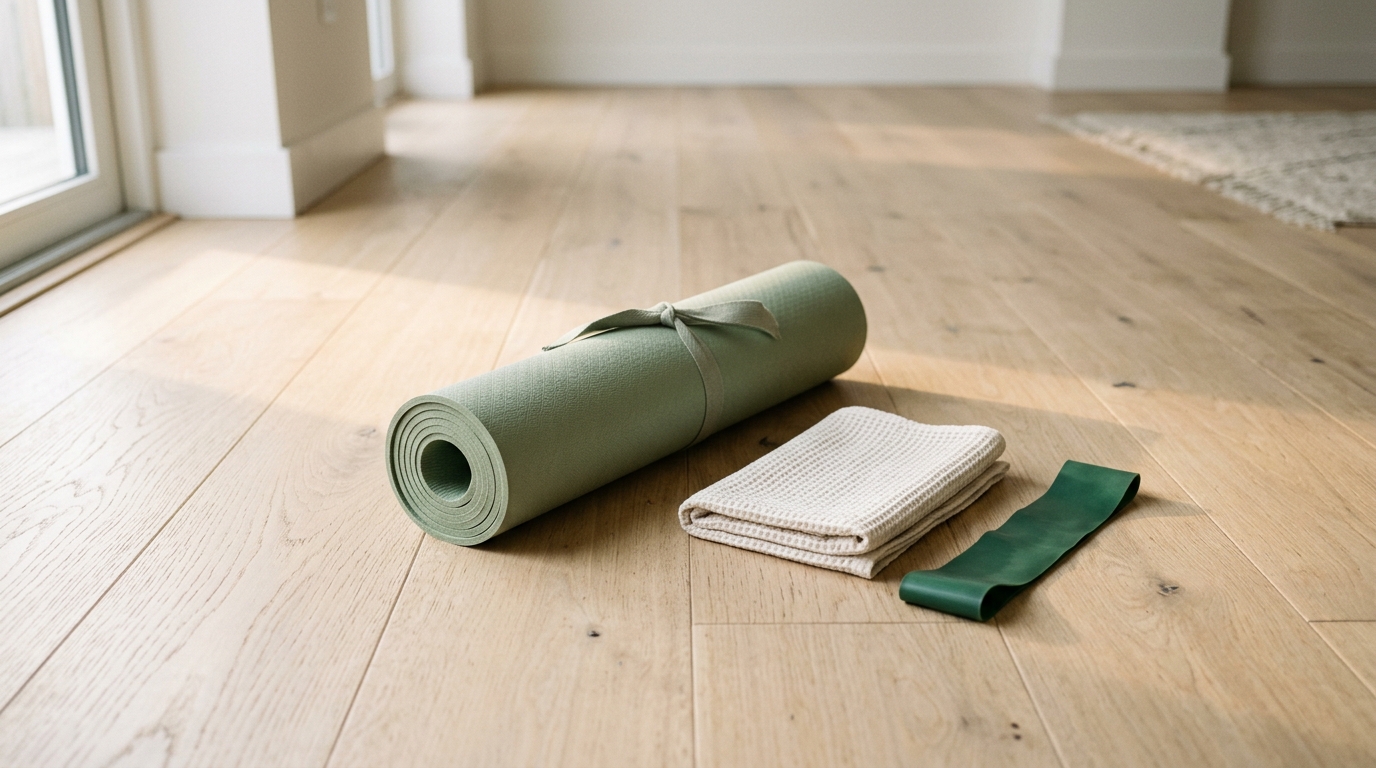
Yes, Pilates can help you lose weight — but indirectly. According to Harvard Health Publishing's calorie chart, a 60-minute Pilates session burns 175 to 375 calories depending on intensity, comparable to a brisk walk and less than running. The American College of Sports Medicine recommends combining Pilates with a calorie deficit and some higher-intensity exercise for fat loss. Pilates is excellent for core strength, posture, mobility, and habit-building — not for raw calorie burn.
The calorie math, honestly
From Harvard Health Publishing's published calorie estimates for a 155-pound person doing one hour:
- Mat Pilates (general): ~175 kcal/hour
- Reformer Pilates (general): ~210 kcal/hour
- Vigorous / "Power" Pilates: ~315-375 kcal/hour
- Walking (3.5 mph): ~280 kcal/hour
- Cycling (12-13 mph): ~560 kcal/hour
- Running (6 mph / 10-min mile): ~705 kcal/hour
- Resistance training (vigorous): ~440 kcal/hour
Pilates lives in the middle. It's not zero. It's also not a fat-burning machine. To lose 1 pound of fat per week through Pilates alone, you'd need to do 8-10 hours per week of vigorous Pilates with no compensatory eating. Most people can't sustain that — and don't need to, when nutrition does most of the work.
What Pilates is great for
1. Core strength that actually shows up in real life
Pilates targets the deep core (transverse abdominis, obliques, multifidus) more than crunches do. Stronger core means better posture, less low-back pain, and a flatter-looking midsection at the same body fat percentage.
2. Mobility and joint health
The slow, controlled range-of-motion work in Pilates restores movement quality that gets lost from sitting all day. A 2013 study in the Journal of Sports Science & Medicine found 12 weeks of Pilates produced significant improvements in flexibility, balance, and dynamic stability — particularly in older adults.
3. Adherence — the underrated benefit
The Mayo Clinic's nutrition and exercise guidance is clear: the best exercise for weight loss is the one you keep doing. Pilates has a near-zero injury rate, can be done at home in 20 minutes, doesn't require recovery days, and feels good. People stick with it. People fall off running. Adherence is everything.
4. Mental health
Pilates is a mind-body practice — breath control, focus, slow movement. People consistently report lower stress and better sleep with regular Pilates. Lower stress means lower cortisol, and lower cortisol supports weight loss indirectly.
5. Pelvic floor health (especially post-pregnancy)
Pilates is one of the few exercise modalities that specifically trains pelvic floor coordination. Worth knowing if you've had children.
What Pilates isn't
- It is not high-intensity cardio. Your heart rate stays moderate. Don't rely on it for cardiovascular fitness alone.
- It is not heavy resistance training. The loads are moderate. You won't build maximal strength or large muscle gains compared to lifting weights.
- It does not "spot reduce" belly fat. The 100-Hundred Pilates abdominal exercise burns negligible calories from your belly area specifically. Spot reduction was disproved by Vispute et al. (JSCR 2011).
- It does not produce dramatic weight loss in 28 days. The wall Pilates challenge results are real but modest — and they require a calorie deficit, not the Pilates alone.
How to use Pilates inside a real weight-loss routine
The combination that works for most people, per ACSM weight-loss guidelines:
- Pilates 3-4 times per week, 30-50 minutes. Mat or reformer, your call.
- Resistance training 2 times per week, 30-40 minutes. Compound lifts: squats, deadlifts, rows, presses, pullups. This is the muscle-building piece Pilates can't do.
- Cardio: 150 minutes per week of moderate intensity OR 75 minutes of vigorous. Walking, cycling, swimming. Distribute across 3-5 sessions.
- A calorie deficit of 300-500 kcal per day from your maintenance. Use our calorie deficit calculator.
- 0.7 to 1 g of protein per pound of body weight. Protects muscle while losing fat.
Inside this stack, Pilates is the connective tissue. It's the joint care, the posture work, the consistency anchor.
Wall Pilates, ranked honestly
Wall Pilates is the TikTok-driven viral version. The "28-day wall Pilates challenge" has been viewed billions of times. Here's the honest read:
- The exercises are real. They're standard Pilates moves with the wall as a brace, feedback surface, or resistance against. Wall sits, wall bridges, wall ab work — these are fine.
- The "tone in 28 days" claims are exaggerated. 28 days will give you better core engagement and habit. It will not transform your body.
- The challenges that work do so because of the calorie deficit. Most include a meal plan or "tea." That's where the weight loss comes from.
- It's a fine entry point for beginners. If wall Pilates is the format that gets you moving daily for 28 days, that's a real win. Just don't expect Pilates magic.
FAQ
Can you lose weight just doing Pilates?
It's possible but slow. Pilates burns 175 to 375 calories per hour depending on intensity (Harvard Health Publishing's calorie chart) — less than running, comparable to a brisk walk. For weight loss, Pilates works best as part of a routine that includes a calorie deficit and some higher-intensity movement, not as the only thing.
Is Pilates better than running for weight loss?
For pure calorie burn per hour, no — running burns roughly twice the calories. For long-term sustainability and injury rate, Pilates often wins. The Mayo Clinic notes that the best exercise for weight loss is the one you actually keep doing for a year.
Does wall Pilates actually work?
It works for what regular Pilates works for — core strength, posture, mobility, mind-body coordination. The 'wall' part is a marketing wrapper. The exercises are mostly standard Pilates moves done with the wall as a brace or feedback surface. The TikTok '28-day wall Pilates challenge' results are mostly water weight and habit change, not Pilates magic.
How often should I do Pilates for weight loss?
3 to 4 sessions per week of 30 to 50 minutes. Layer in 2 strength sessions and 150 minutes of moderate cardio per week if your goal is weight loss. The American College of Sports Medicine's recommendations for weight loss specifically call for combined modalities, not single-mode exercise.
Will Pilates flatten my stomach?
Pilates strengthens the deep core muscles (transverse abdominis, obliques) and improves posture, which can make your midsection look flatter. It does not selectively burn belly fat — the concept of 'spot reduction' has been disproved repeatedly (Vispute et al., Journal of Strength and Conditioning Research, 2011).
Read more on Real Easy Diet
- Does creatine help you lose weight?
- Is rice good for weight loss?
- How to tighten skin after weight loss
- How to lose water weight
- A 7-day Real Easy meal plan
- Healthy snacks for weight loss
- Calorie deficit calculator
Sources
- Harvard Health Publishing — Calories burned in 30 minutes by activity
- American College of Sports Medicine — Exercise prescription for weight loss
- Mayo Clinic — Pilates for beginners
- Vispute SS et al. — Effect of abdominal exercise on abdominal fat, JSCR 2011
- Cruz-Ferreira A et al. — Effects of Pilates-based exercise programs, JSSM 2013
- Cleveland Clinic — Pilates: benefits and how to start
A printable plan that refuses to count almonds.
Four-week schedule. Grocery list. Swap rules. No "fat-burning loophole." No app to download. You print it, you stick it on the fridge, you eat real food.
- 4-week schedule
- Grocery PDF
- Swap rules
- No app, no fees