Chromium vs Berberine: Two Blood-Sugar Adjuvants, Honestly Compared
Chromium has been a blood-sugar supplement staple for forty years. Berberine became 'nature's Ozempic' in 2023. Both are in the same conversation about insulin sensitivity. The mechanisms are different. The evidence is different. Here is the honest, sourced read.
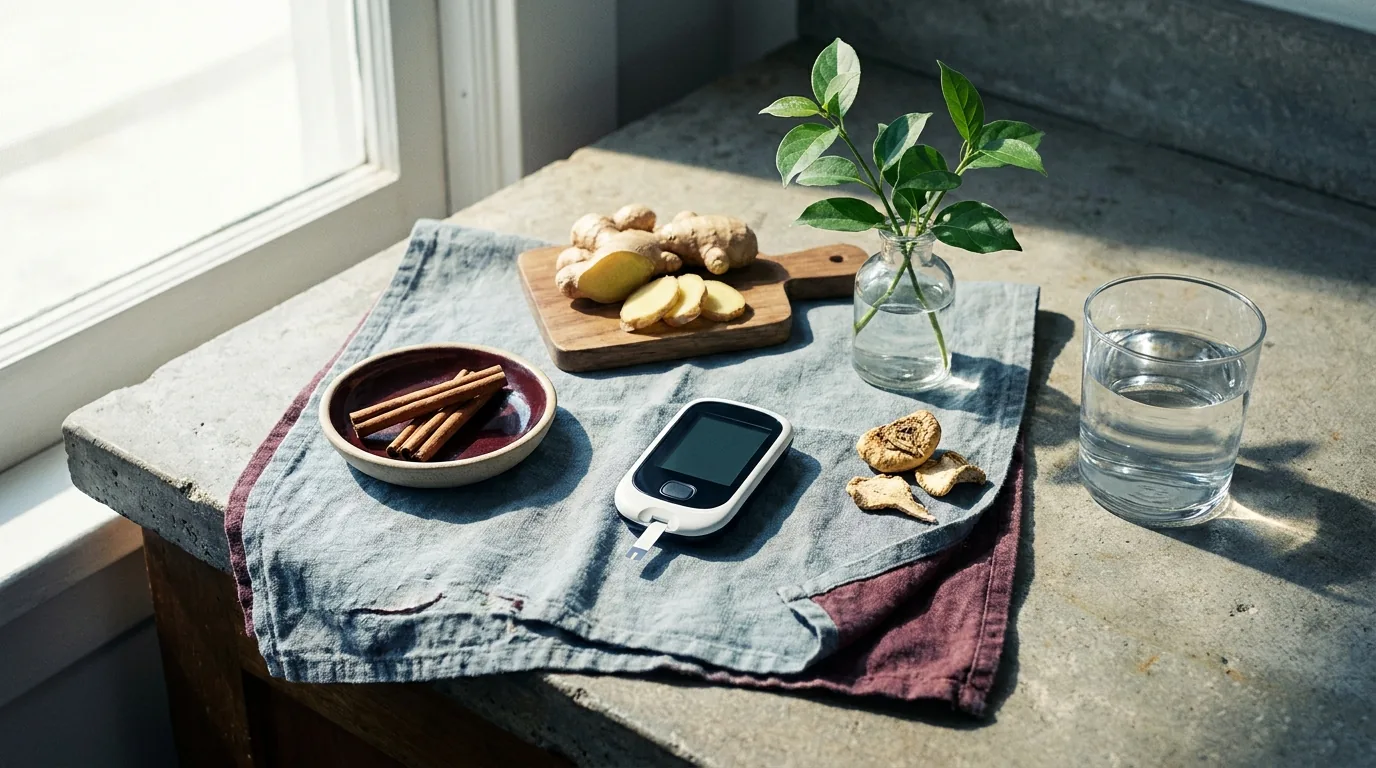
Chromium and berberine both target insulin sensitivity, but through different mechanisms. Chromium acts as a cofactor for insulin receptor signaling, improving the cellular response to insulin. Berberine activates AMPK (the master metabolic switch) and modulates the gut microbiome. Berberine has the stronger, more consistent evidence base for fasting glucose, A1C, and modest weight effects — comparable to metformin's magnitude in some trials. Chromium has a larger but mixed literature, with the most-cited benefits in chromium-deficient populations or at higher doses (200-1,000 mcg/day of chromium picolinate). They can be combined in theory, and several commercial supplements pair them, but the head-to-head trial data at fixed combination doses is thin. Neither replaces prescribed care.
Insulin sensitivity vs AMPK — two mechanisms, one outcome
What chromium does
Chromium is an essential trace mineral that serves as a cofactor for chromodulin, an oligopeptide that enhances insulin receptor activity at the cellular level. When insulin binds its receptor, chromodulin (loaded with chromium) helps amplify the downstream signal cascade — meaning cells respond more efficiently to a given level of insulin. The mechanism is well-established at the biochemistry level. The clinical magnitude — how much that translates to glucose, A1C, or weight in real humans — is where the evidence gets variable. Chromium's effect appears largest in populations with low baseline chromium status or with insulin resistance that responds to receptor-sensitization rather than to gluconeogenesis-level interventions.
What berberine does
Berberine acts through multiple documented mechanisms. The most-cited is activation of AMPK, the master cellular energy switch that, when activated, suppresses hepatic gluconeogenesis (the liver makes less glucose) and improves peripheral insulin sensitivity. Berberine also modulates the gut microbiome over weeks, inhibits intestinal alpha-glucosidase (reducing carbohydrate absorption), and inhibits CYP3A4 (which is both pharmacologically interesting and a real drug-interaction issue). The combined mechanism is broader than chromium's. We cover the full mechanism in our berberine review.
Why the mechanism difference matters clinically
Chromium amplifies what is already happening — it makes cells more responsive to insulin that the body is already producing. Berberine adds new effects on top of that — it reduces the liver's glucose output and shifts gut microbiome composition. The mechanism difference means the two are not redundant in theory. Whether the combination produces additive effects in practice is where the evidence is thin.
Magnitude and evidence depth
| Factor | Chromium | Berberine |
|---|---|---|
| Fasting glucose | Small/variable | ~1-2 mmol/L reduction |
| A1C (12+ weeks) | ~0.3-0.6 pp (mixed) | ~0.7-1.5 pp |
| Weight (12 wk) | ~2-5 lb (variable) | ~5 lb (variable) |
| Lipids (LDL, TG) | Small effects | Modest improvements |
| Evidence depth | Large but mixed | 14+ RCTs, consistent |
| NIH/regulatory view | Inconclusive for T2D | Promising adjunct, not approved |
Chromium's mixed evidence picture
Chromium has been studied for decades. The Anderson et al. work in the 1990s reported significant insulin-sensitivity improvements with chromium picolinate at 1,000 mcg/day in type 2 diabetics. Subsequent trials have produced mixed results — some replicating the effect, others finding minimal or no benefit. The NIH Office of Dietary Supplements characterizes the overall evidence as "inconclusive" for type 2 diabetes management. The chromium picture is consistent with a real but variable effect that depends on baseline chromium status, population genetics, and possibly the specific salt form used.
Berberine's more consistent picture
Berberine's evidence base, while smaller in total volume, has been more consistent. The Yin 2008 head-to-head trial against metformin showed comparable glycemic effects. The Dong 2012 meta-analysis pooled 14 RCTs and found consistent modest improvements across glucose, A1C, and lipid markers. The consistency across studies is one of the reasons berberine has become the supplement-side conversation it has, despite its much shorter history in modern clinical use.
Combining them — does it help?
Many commercial blood-sugar supplements include both chromium and berberine (often with cinnamon, gymnema, alpha-lipoic acid, and other actives). The proposed rationale is mechanism complementarity — chromium at the insulin receptor, berberine at AMPK and the gut microbiome. The theoretical case is reasonable.
The clinical case is thinner. The combination has not been tested in large head-to-head trials at fixed doses against either component alone. The available evidence suggests the combination is plausible but not dramatically additive over either component used at clinically meaningful single doses.
For consumers reading a proprietary-blend label, the practical issue is that combination supplements often under-dose each active in order to fit multiple actives into one capsule. A formula listing chromium, berberine, cinnamon, and gymnema may contain sub-clinical amounts of each. The single-active products at studied doses are often a more honest path if you want to test what either actually does.
Safety profiles compared
- Chromium: kidney and liver case reports at very high doses. Rare reports of issues at sustained intakes above 1,000 mcg/day for many months. At 200-500 mcg/day (the typical dose range), no documented safety signal in healthy adults.
- Chromium: thyroid medication interaction. Chromium can interfere with the absorption of levothyroxine (Synthroid). Spacing them apart by several hours mitigates this. Real and worth knowing if you take thyroid medication.
- Berberine: GI symptoms. Diarrhea, constipation, cramping in 10-30% of users during the first few weeks. Usually improves.
- Berberine: CYP3A4 drug interactions. The most underappreciated berberine safety issue. Berberine inhibits CYP3A4, which metabolizes a huge fraction of prescription drugs (statins, blood thinners, blood pressure medications, immunosuppressants). The clinical implication: adding berberine can change plasma levels of these drugs unpredictably.
- Both: hypoglycemia in combination with diabetes medications. Either combined with insulin, sulfonylureas, or other glucose-lowering drugs can amplify hypoglycemia risk. Standalone hypoglycemia risk is minimal at studied doses.
- Both: pregnancy and breastfeeding. Limited safety data. Avoid unless cleared by your prescriber.
Doses the studies used
Chromium picolinate. Most studies used 200-1,000 mcg/day, typically split into two doses with meals. The 200 mcg dose is sufficient for general nutritional adequacy. The 500-1,000 mcg dose appears more relevant for insulin-sensitivity effects in research. Doses above 1,000 mcg/day have not shown clear additional benefit and carry slightly elevated case-report risk.
Berberine HCl. The most-cited human trials used 500 mg three times per day (1,500 mg total daily), taken with meals. Berberine's bioavailability is low (~5%), which is why the three-times-daily split-dosing exists. Single-dose formulations exist commercially but the studies used the divided dose.
Both are doses studies have used — not personal prescriptions. Your prescriber will set what is appropriate for your situation if either is part of your plan.
Who each one fits
Chromium fits the reader who: suspects insulin sensitivity (rather than overall liver glucose output) is the bottleneck, has a lower-risk profile and limited prescription medication burden, wants a cheaper, well-studied trace-mineral approach, or is using a multi-ingredient blood-sugar formula and wants to know what one of the components is actually doing.
Berberine fits the reader who: wants the broader metabolic-effect profile (AMPK, gut microbiome, lipid effects), is willing to commit to three-times-daily dosing, and is not currently on prescription medications that interact with CYP3A4. The evidence base is more consistent than chromium's.
Both together fits the reader who: is exploring a finished blood-sugar formula and wants the mechanism complementarity in one product, with the caveat that combination dosing in commercial blends is often sub-clinical for each active.
Neither fits the reader who: is currently on diabetes medication without a doctor's review, has significant kidney impairment, is pregnant or breastfeeding, or is looking for a replacement for prescribed care.
FAQ
Which has stronger evidence — chromium or berberine?
Berberine has the more robust and consistent evidence base for glycemic control and weight in adults with type 2 diabetes or prediabetes. Chromium's literature is large but mixed — some trials show meaningful improvements in insulin sensitivity and modest weight effects (especially in chromium-deficient populations), and other well-designed trials show minimal or no effect. The chromium picture is mixed enough that the National Institutes of Health's Office of Dietary Supplements concludes the evidence is 'inconclusive' for type 2 diabetes management. Berberine has more consistent trial-level effects on fasting glucose, A1C, and lipids.
Can I take chromium and berberine together?
There is some research support for combining them, primarily in formulas marketed for blood sugar support. The proposed rationale is that they act at different points in insulin signaling — chromium improves the cellular response to insulin, berberine activates AMPK to reduce hepatic glucose output and improve peripheral insulin sensitivity. The combination is plausible in theory but has not been studied in large, well-designed head-to-head trials at fixed doses. If you take any prescription medication — especially diabetes drugs, thyroid medications, or anything metabolized via CYP3A4 — the combination conversation belongs with your prescriber.
Which is better for weight loss specifically?
Neither is a weight-loss drug, and the magnitudes are modest. Chromium picolinate has small effects on weight — typically 2-5 pounds across multiple-month trials, with some studies showing no effect. Berberine has slightly larger weight effects in some trials — roughly 5 pounds across 12-week studies, with high variance. Both work primarily by improving insulin sensitivity, which reduces the cravings and energy crashes that drive overeating. Neither approaches the magnitude of a GLP-1 receptor agonist. The 'nature's Ozempic' framing overstates either supplement by an order of magnitude.
What about chromium picolinate vs chromium polynicotinate?
The form matters. Chromium picolinate is the most-researched form and has the most consistent absorption data. Chromium polynicotinate (bound to niacin) has its proponents but a thinner evidence base. Chromium chloride has poor bioavailability. Most studied benefit for insulin sensitivity comes from picolinate at 200-1,000 mcg/day. If you are taking a supplement, the form is worth checking — generic 'chromium' on a label can mean different things.
Are there safety risks with either?
Both have generally good safety records at studied doses. Chromium at the typical 200-500 mcg/day is well within the National Academy of Medicine's adequate intake range. Very high doses (over 1,000 mcg/day for extended periods) have been associated with rare case reports of kidney and liver issues. Berberine's documented issues are GI (diarrhea, constipation) and the CYP3A4 drug-interaction profile — meaningful if you take prescription medications. Neither is recommended in pregnancy due to limited data. Talk to your prescriber if you have any prescription medications or relevant conditions.
Is one better for adults over 40 specifically?
The blood-sugar deterioration that comes with age makes both relevant for adults 40+, but the mechanism difference matters. Berberine has more impact on the AMPK-mediated metabolic decline that often shows up as gradual fasting glucose creep, modest weight gain, and reduced exercise responsiveness in middle age. Chromium has more value if there is documented chromium deficiency (uncommon in modern Western diets but real in some populations) or specific insulin sensitivity issues. Most adjuvant blood-sugar formulas marketed at adults 40+ include both — which is the supplement industry's way of hedging mechanism uncertainty.
Read more on Real Easy Diet
- Berberine review — the full ingredient breakdown
- Berberine vs metformin — the prescription comparison
- Apple cider vinegar vs berberine — different mechanisms
- Best berberine supplements (2026 editorial picks)
- Sugar Defender review — multi-ingredient blood-sugar formula
- GLP-1 natural alternatives — what the research shows
- Best GLP-1 natural alternatives — editorial picks
Sources
- NIH Office of Dietary Supplements — Chromium fact sheet for health professionals
- Anderson RA et al. — Elevated intakes of supplemental chromium improve glucose and insulin variables, Diabetes 1997
- Yin J et al. — Efficacy of berberine in patients with type 2 diabetes mellitus, Metabolism 2008
- Dong H et al. — Berberine in the treatment of type 2 diabetes mellitus, Evid Based Complement Alternat Med 2012
- American Diabetes Association — Dietary supplements and diabetes
- NIH NCCIH — Berberine and weight loss: what you need to know
- Examine.com — Independent supplement research database
A printable plan that refuses to count almonds.
Four-week schedule. Grocery list. Swap rules. No "fat-burning loophole." No app to download. You print it, you stick it on the fridge, you eat real food.
- 4-week schedule
- Grocery PDF
- Swap rules
- No app, no fees